

When should you modernize a production line instead of replacing it?
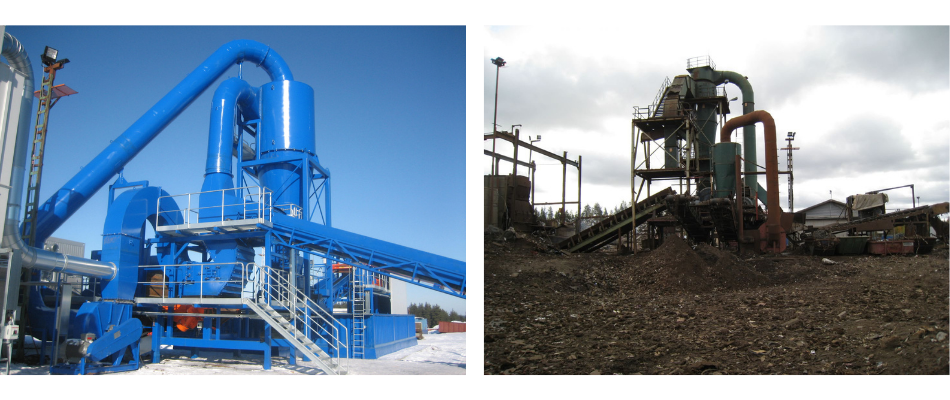
Industrial investments are long-term decisions that require careful planning and a clear vision for the future. When production facilities change, capacity requirements increase, or processes need upgrading, the first instinct is often to invest in an entirely new production line.
In reality, existing equipment can often provide a far more cost-effective foundation for improving production performance.
With decades of experience in material handling solutions, recycling technology, and wood processing systems, RecTec Engineering Oy has seen countless examples where used production lines have been transformed into modern, safe, and highly efficient facilities capable of delivering value for many years to come.
An aging production line is not necessarily at the end of its useful life. In many cases, it simply needs a new purpose, strategic upgrades, or a better-designed process around it.
Why modernize an existing production line?
Equipment used in the recycling industry, scrap processing, and wood processing industry is typically built for extremely demanding operating conditions. Heavy-duty steel structures, robust components, and industrial-grade machinery are designed to withstand decades of intensive use.
When a company relocates, expands production, or updates its processes, an existing line may no longer fit its environment as it is. However, this does not mean the entire investment needs to be replaced.
In many cases, existing equipment can be reused, including:
- Conveyor systems
- Feeding systems
- Crushers
- Separation equipment
- Steel structures
- Material handling systems
With the right engineering expertise and workshop capabilities, these assets can become the foundation of a modernized production facility.
Learn more about RecTec's solutions for the wood processing industry

Modernization is an opportunity to improve the entire process
An existing production line rarely fits perfectly into a new facility without modifications. Equipment often needs to be relocated, reconfigured, shortened, extended, or rebuilt to match the available space and production requirements.
At the same time, modernization creates an excellent opportunity to improve the entire process.
Capacity and material flow
Production requirements evolve over time. A modernized production line can increase throughput, eliminate bottlenecks, and optimize material flow throughout the process.
Higher efficiency often means more output without the need for entirely new infrastructure.
Separation performance
In recycling operations, quality requirements continue to increase. Modernization projects often include upgrades to sorting and separation systems, enabling higher recovery rates and improved product quality.
Energy efficiency and power consumption
Upgrading motors, drives, and control systems can significantly reduce energy consumption while improving process reliability.
Workplace safety and working environment
Modern safety systems, protective structures, access platforms, and automation solutions help improve safety while minimizing downtime.
Dust control
Dust management is a critical aspect of both recycling and wood processing operations. Modernization projects can include entirely new dust extraction and air handling systems that improve workplace conditions and process efficiency.
Explore RecTec's engineering and production services

Cost efficiency at the center of every project
Building an entirely new processing facility requires substantial capital investment. Reusing existing equipment often provides significant savings while achieving many of the same operational benefits.
By preserving usable structures and components, companies can:
- Reduce investment costs
- Shorten project timelines
- Accelerate commissioning
- Minimize production interruptions
The end result is a modernized facility that meets current production, efficiency, and safety requirements without the cost of replacing everything from the ground up.
Reusing equipment supports sustainability
Industrial sustainability is about more than energy efficiency alone. One of the most effective ways to reduce environmental impact is to maximize the lifespan of existing assets.
By avoiding the premature scrapping of heavy steel structures, conveyors, and industrial equipment, companies can:
- Preserve natural resources
- Reduce manufacturing-related emissions
- Minimize material waste
- Extend the lifecycle of existing investments
This is circular economy thinking in practice.
Read more about RecTec's recycling technology solutions

A modernized facility can be CE marked
One of the most common questions regarding used equipment is whether the upgraded facility can comply with modern regulations and safety standards. When modernization is carried out correctly and includes the required safety systems, inspections, and documentation, the rebuilt facility can be CE marked in accordance with applicable requirements.
This means customers can benefit from a safe, compliant, and highly productive processing plant that performs like a new installation while utilizing existing assets wherever possible.
Experience makes the difference
Modernizing a production line requires much more than relocating equipment. Success depends on understanding material flows, capacity requirements, process design, workplace safety, and long-term operational performance.
RecTec Engineering Oy designs, manufactures, and modernizes material handling systems, conveyor solutions, and processing lines for the recycling and wood processing industries. Through in-house engineering, manufacturing, and project management, existing investments can be transformed into efficient and future-ready production facilities.
Discuss your modernization project with our experts
Summary
When a production line begins to show its age, replacing it is not always the best solution.
In many cases, modernizing existing equipment provides:
- Lower investment costs
- Faster implementation
- Improved energy efficiency
- Modern safety standards
- Extended equipment lifecycle
- A more sustainable approach to production development
An old investment can be given a new life and in many cases, it is also the smartest business decision.